


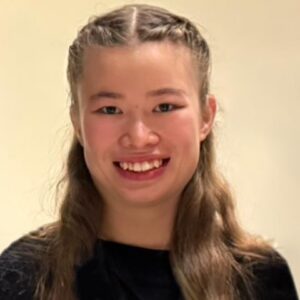
Sophie D'Halleweyn
MIT HEALS | MIT Clinical Health and Life Sciences Collaborative Undergraduate Research and Innovation Scholar
Bridging Clinical Workflows and Machine Learning: Predictive Modeling of Pediatric Physiological Deterioration
2026–2027
Chemistry; Mathematics
- Health and Life Sciences
- AI for Healthcare and Life Sciences
- Biology
Joseph Frassica
It is hard to tell when critically ill children in the Pediatric Intensive Care Unit (PICU) will suddenly deteriorate in condition. AI could spot warning signs early, but today’s algorithms are built for adults and fail to consider changes in a child’s normal vital signs shift as they grow. To make matters worse, medical records are cluttered with delayed charting and false alarms. This project is building an AI early-warning system designed specifically for children. By using continuous hospital data, the system adapts to a child’s exact age while filtering out data noise and false alarms. Instead of overwhelming medical staff, this tool delivers clear, trusted alerts to give healthcare teams a critical head start to intervene and save young lives.
Through SuperUROP, I want to gain more experience integrating clinical research with machine learning. Working at Memorial Sloan Kettering this summer really sparked my interest in how computational tools can support clinical care, and I’m excited to apply the concepts I learned in 6.390 to solve complex, real-world problems in medicine.