


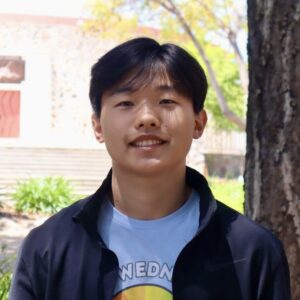
Sehoon Kang
MIT HEALS | MIT Health and Life Sciences Collaborative Undergraduate Research and Innovation Scholar
Longitudinal Dissection of Memory Engrams with All-Optical Physiology
2026–2027
Brain and Cognitive Sciences
- Health and Life Sciences
- Brain and Cognitive Science
- Optics + Photonics
Linlin Fan
Memory is stored in small groups of brain cells that become active when we learn something new. Scientists call these groups “engrams.” When something goes wrong with how these cell groups form or get reactivated, it can lead to memory disorders like Alzheimer’s disease or conditions like PTSD. Despite decades of research, we still don’t fully understand what makes a brain cell join an engram, or what changes in the cell afterward to help lock the memory in place. We will use cutting-edge light-based tools like voltage imaging and optogenetics to watch and control the activity of individual brain cells in mice as they form memories in real time. This will allow us to discover the precise activity patterns that determine which cells become part of a memory, and how those cells change after a memory is formed. Our findings could shed light on the fundamental rules of memory storage in the brain and open new avenues for treating diseases that disrupt it.
I am participating in SuperUROP because it provides a longitudinal research opportunity with abundant mentorship and time to exchange ideas with colleagues. Through research and sharing of my work with others, I will cultivate myself as a rigorous and collaborative scientist who can answer big questions that currently lack answers in medicine and impact patient lives.