


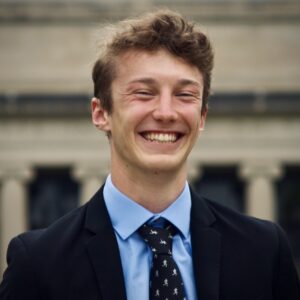
Ryan J. Tomich
MIT EECS | Nadar Foundation Undergraduate Research and Innovation Scholar
Selective Action and Evidence Acquisition for Agentic Program Optimization
2026–2027
Electrical Engineering and Computer Science
- AI and Machine Learning
- Programming Languages and Software Engineering
Charles E. Leiserson
Code-generating language models used as program-optimization agents increasingly rely on retrieved examples, tests, profilers, and runtime measurements to improve program performance. These tools can suggest optimization strategies, guide transformations, and verify measurable speedups, but they also consume tokens, context-window space, and tool-call budget. Poorly timed evidence gathering can also steer the model toward irrelevant edits. This project studies cost-sensitive control for agentic program optimization, focusing on when an agent should seek additional evidence and when it should act on the evidence it already has. The proposed approach adds a lightweight external controller around a frozen language model. Rather than following a fixed workflow or allowing the model to decide each step, the controller uses observed signals such as compilation status, test outcomes, profiler output, measured speed, action history, and remaining budget to select among optimization actions. The project will evaluate whether selective control can improve correctness-preserving speedup under explicit token, execution, and tool-call costs.
I am participating in SuperUROP to practice running my own project and building useful systems end to end. Its technical content sits orthogonal to much of my coursework, giving me a more full educational experience. I am also drawn to decision-making and restraint: the challenge of making systems more efficient without sacrificing performance is itself compelling.