


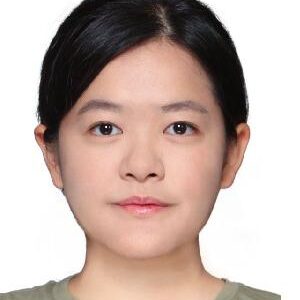
Grace Chang Yuan
MIT EECS | Nadar Foundation Undergraduate Research and Innovation Scholar
Reinforcement Learning for Hallucination Reduction in Large Language Models
2026–2027
Electrical Engineering and Computer Science; Mathematics
- AI and Machine Learning
Yoon Kim
Large language models are increasingly deployed in settings that require faithful reasoning over long contexts, such as retrieval-augmented generation (RAG) and multi-document question answering. Yet a growing body of evidence reveals that LLMs hallucinate more as context length increases (Bai et al., 2025), a phenomenon known as “context rot”. This makes long-context hallucination one of the most pressing reliability challenges in modern AI systems.a
A key driver of this problem is positional bias. Liu et al. (2024) demonstrated that LLMs exhibit a U-shaped accuracy curve in multi-document QA: performance is strong when the answer appears at the beginning or end of the context, but drops by over 30% when it sits in the middle. Critically, Wan et al. (2025) showed that this is not merely an accuracy problem but a hallucination problem – LLMs generate more unfaithful content when summarizing information from middle positions. As context windows grow longer, the “middle” encompasses the vast majority of the input, meaning most contextual information falls in the region where the model is least faithful.
Meanwhile, reinforcement learning has emerged as a powerful tool for reducing hallucinations at training time. Methods like DPO and GRPO have achieved significant faithfulness improvements by training models to prefer grounded responses over fabricated ones. However, most work on long-context hallucination specifically has focused on inference-time approaches – context compression, attention calibration, and detection via attention patterns (Chuang et al., EMNLP 2024). RL-based training and positional bias mitigation remain largely disconnected: no work has designed RL reward functions that explicitly penalize position-dependent variation in faithfulness. This project aims to bridge this gap.
SuperUROP presents a unique opportunity for me to operate at the intersection of rigorous academic research and problems that matter. I will get the chance to apply what I have learned in the classroom to questions that remain genuinely open in the field. Specifically, I am drawn to this program because it offers a structured environment in which I can develop the habits and intuitions of a researcher: learning to identify the right questions, design principled experiments, and interpret results critically rather than simply implement existing solutions. The project itself sits at the heart of a challenge I find deeply compelling – making large language models more reliable and trustworthy – and I am eager to contribute to that work in a meaningful way. I also look forward to working closely with Prof. Kim, whose expertise in this area will push me to think more rigorously and carefully than I could on my own.