

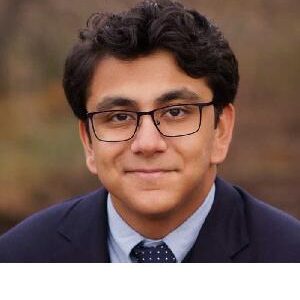
Darius A. Sinha
MIT HEALS | MIT Health and Life Sciences Collaborative Undergraduate Research and Innovation Scholar
Investigating Metabolic Constraints Driving Sensitivity to RAS Inhibition in Hypoxia
2026–2027
Electrical Engineering and Computer Science
- Health and Life Sciences
Matthew Vander Heiden
Oncogenic RAS is a major driver of pancreatic ductal adenocarcinoma (PDAC). Emerging RAS-targeting treatments have shown promising clinical activity, but treatment resistance remains a major challenge. Since oncogenic RAS supports cancer growth in part by regulating metabolism, this project investigates how metabolic limitations in the tumor microenvironment (TME) affect response to RAS inhibition. Preliminary results show that hypoxia, a feature of the PDAC TME, sensitizes PDAC cells to the pan-RAS inhibitor RMC-7977. We hypothesize this reflects a metabolic vulnerability in which RAS inhibition reduces glucose uptake and increases reliance on mitochondrial metabolism, which is constrained under low oxygen. To investigate this hypothesis, I will measure glucose uptake under normoxic and hypoxic conditions and test whether RAS inhibition alters glucose transporter levels. I will then determine whether manipulating glucose transport via glucose transporter overexpression, pharmacologic inhibition, or insulin-stimulated uptake alters sensitivity to RMC-7977. Finally, time permitting, I will use RNA-seq and LC-MS metabolomics to identify additional metabolic adaptations to RAS inhibition. Together, these studies aim to define how hypoxic metabolic stress shapes RAS inhibitor response and reveal metabolic dependencies that could be targeted in combination therapies for PDAC.
I am very excited to be a part of the SuperUROP program. Working in the Vander Heiden lab for the past year and a half has been one of the most rewarding experiences I’ve had at MIT. During my time in the lab, I have learned a lot about cancer metabolism, research techniques, and scientific communication. I am looking forward to continuing that growth through the SuperUROP program, formally developing my skills in scientific thinking and communication as part of my continued work in the lab and through the class portion of the program. Through my research over the next year, my hope is to help answer meaningful scientific questions that can help lead to improved patient outcomes.