

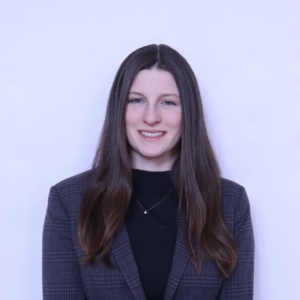
Brooke W. Birdsall
MIT HEALS | MIT Health and Life Sciences Collaborative Undergraduate Research and Innovation Scholar
Using Apical-out Airway Organoids for Pulmonary Lipid Nanoparticle Optimization
2026–2027
Chemical Engineering
- Health and Life Sciences
Daniel Anderson
Lipid nanoparticles (LNPs) are a clinically advanced method in development for pulmonary mRNA delivery drugs for applications in gene therapies. One of the promising uses for gene therapy is delivery to pulmonary regions to treat diseases like cystic fibrosis (CF), idiopathic pulmonary fibrosis, chronic obstructive pulmonary disease, asthma, and more. Current 2D in vitro cultures and low-throughput in vivo models present several drawbacks. Apical-Out Airway Organoids (AOAO) are a relevant screening platform that provides an opportunity to systematically address several persistent challenges in pulmonary LNP delivery, like toxicity. This project aims to develop a library of LNPs with variation in chemical components and formulations. Using high-throughput in vitro screening in AOAO, toxicity and delivery in pulmonary contexts can be assessed. The objective is to identify candidates for further specific investigation by optimizing within the library. Building on these challenges, this project will directly address the gap between high-throughput screening capacity and physiological relevance in pulmonary LNP development. By generating a chemically diverse library of LNP formulations, this work aims to understand the relationship between formulation chemistry, delivery effectiveness, and toxicity. This project addresses the challenge of balancing potency with toxicity in pulmonary systems, which is a critical step towards enabling clinical translation for respiratory diseases.
I’m excited to participate in SuperUROP because it’s an amazing opportunity to expand beyond my current UROP experience. I look forward to furthering a project I have supported for the past 3 years at MIT and adding a communication component. Growing more confident in presenting research to outward audiences is a facet of SuperUROP that I’m interested in developing further. Finally, spending my senior year exploring a new platform for nanoparticle screening will be a rewarding way to cap off my undergraduate research experience.