


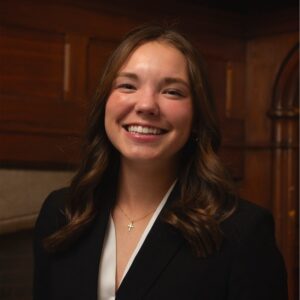
Margaret (Maggie) S. Feng
MIT HEALS | MIT Health and Life Sciences Collaborative Undergraduate Research and Innovation Scholar
Identifying the Molecular Requirements for Dormancy in Normal Tissues and Cancer
2026–2027
Biological Engineering
- Biological Engineering
- Health and Life Sciences
- Biology
Kristin Knouse
Metastatic recurrence in breast cancer is driven partly by cancer cells entering a reversible dormant state called quiescence, whose molecular basis remains poorly understood. Using a genome-wide in vivo CRISPR screen in quiescent mouse hepatocytes, we have identified three pathways-mitochondrial maintenance, selective autophagy, and peroxisomal function-that are uniquely essential for long-term quiescence but missed by short-term screens and are absent in proliferating cancer cell lines, suggesting they are genuine, targetable dependencies of the dormant state. We will build on this by: (1) functionally validating these hits in hepatocytes, (2) contributing to a parallel CRISPR screen in dormant breast cancer cells to test whether these dependencies are conserved, and (3) comparing both datasets to distinguish universal quiescence mechanisms from cancer-specific vulnerabilities. This work will help identify therapeutic targets that eliminate dormant cancer cells while sparing healthy quiescent tissue, laying groundwork for future anti-recurrence therapies.
Through this SuperUROP, I hope to take my research beyond analysis and into discovery. Cancer dormancy sits at the heart of why patients relapse years after remission–this SuperUROP will give me the time and the mentorship to move from finding cellular quiescent requirements to testing them, ultimately expanding my research instincts and encouraging me to keep chasing questions such as the latter.